
Which Party Will Win the U.S. House in 2026? Prediction Markets Favor Democrats
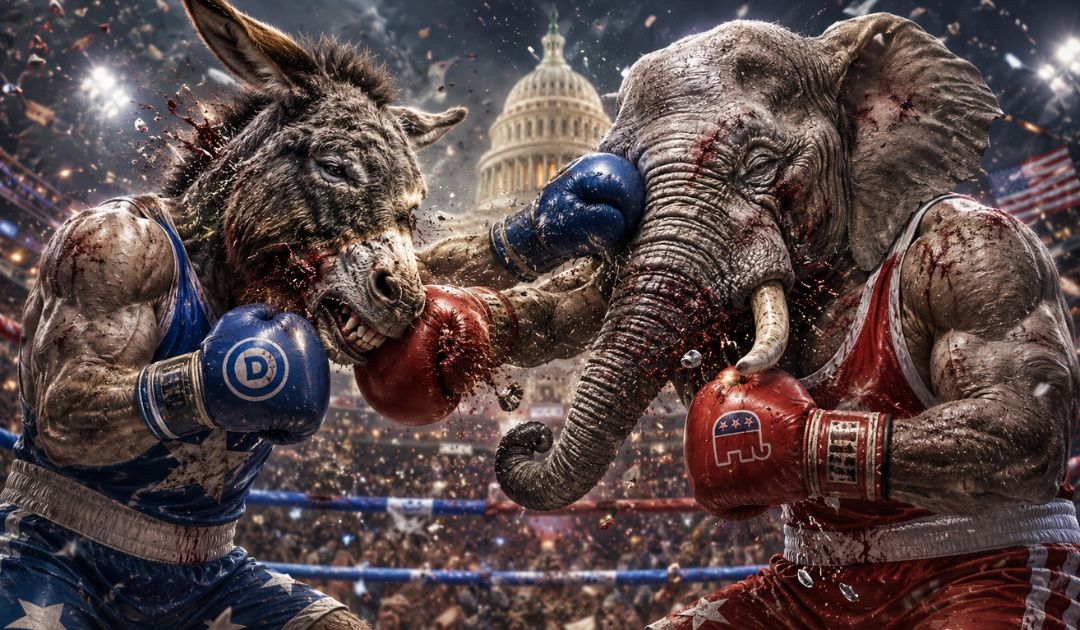
Prediction markets currently give Democrats roughly an 83% to 86% chance of winning control of the U.S. House in November, while Republicans still have a realistic path to a narrow hold.
Prediction markets currently favor Democrats to win control of the U.S. House in the November 3, 2026 midterm elections. Kalshi gives Democrats an 83% chance and Republicans a 17% chance, while other prediction markets place the race in a similar range.
The gap is wide, but the election isn't settled. Republicans begin with a narrow House majority, and Democrats need only a small net gain to take control. A handful of competitive districts, changes in turnout or a late shift in the national political environment can decide the chamber.
Current polling, prediction-market prices and the usual midterm pressure on the president's party all favor Democrats. Republicans still have a path because redistricting improves their position in several states and the expected majority remains narrow.

U.S. House Prediction Market Snapshot
Market prices and probabilities change as traders place orders and new political information becomes available. The latest trade, bid, ask and checkout price can differ.
How the House Control Contract Settles
The Republican contract resolves Yes when the Republican Party wins control of the House in the 2026 election. The Democratic contract resolves Yes when Democrats win control. At most one party market can settle at $1.
Kalshi verifies the result through the Library of Congress. The market can settle early when a consensus of media calls projects House control. Without an early determination, the party identification of the Speaker of the House on February 1, 2027 decides the result.
The market opened on November 6, 2024 at 10:00 a.m. EST, closes on February 1, 2027 at 10:00 a.m. EST and lists a projected payout time of February 1, 2027 at 11:00 a.m. EST. Kalshi identifies the series as CONTROLH, the event as CONTROLH-2026 and the Republican market as CONTROLH-2026-R.
Republicans Begin With a Narrow House Majority
Republicans currently hold 218 House seats, compared with 212 Democrats, one independent and four vacancies. That small margin leaves both parties with little room for error. Democrats can win control with a limited number of flips, while Republicans can retain the chamber by defending most of their vulnerable districts and benefiting from favorable maps.
The national popular vote matters, but it doesn't decide House control by itself. The majority comes from 435 separate district elections. A party can lead nationally and still fall short when its support is concentrated in safe districts rather than the competitive seats that decide the chamber.
Why Prediction Markets Favor Democrats
Several current indicators point in the same direction. None guarantees the result, but together they explain why Democrats trade above 80%.
Democratic Generic Ballot Lead
Recent national polling generally gives Democrats an advantage on the congressional ballot. Fox News reports a seven-point Democratic lead, while another July poll highlighted by the New York Post places the race closer at 48% to 45%.
The Midterm Pattern
The president's party usually loses House seats during midterm elections. That pattern works against Republicans during President Trump's second term, although exceptions remain possible.
A Small Number of Flips Can Decide Control
Democrats don't need a national landslide. A modest swing across a limited group of competitive districts can produce a new majority.
Prediction Markets Agree
Multiple prediction markets place Democrats in the low-to-mid 80% range. Similar pricing across separate exchanges shows broad agreement among traders about the current favorite.
Prediction-market odds aren't polling averages, and they don't prove that Democrats will win. They reflect the prices traders accept after weighing polling, district ratings, redistricting, fundraising, candidate quality and the possibility of future events.
Why Republicans Still Have a Path to Hold the House
Republicans remain underdogs, but the race isn't over. AP and Reuters report that Republican-led redistricting can improve the GOP map by roughly 10 to 12 seats if the new districts perform as intended. That structural advantage can offset part of a Democratic national lead.
Republican Redistricting Gains
New maps in several states make some Democratic districts harder to defend and create additional Republican opportunities.
A Narrow Expected Majority
Even forecasts that favor Democrats often point toward a relatively small majority. A handful of races moving toward Republicans can change the result.
Turnout and Candidate Quality
Local candidates, district-level turnout and campaign organization can outperform or underperform national polling, especially in close suburban seats.
Four Months of Political Risk
The economy, foreign policy, presidential approval and unexpected events can move the national environment before voters make the final decision.
The Republican Case Is Weaker, Not Impossible
An 83% Democratic probability still leaves approximately a 17% Republican chance. That is a clear disadvantage, but it remains large enough that a Republican hold wouldn't be impossible.
What a $100 Prediction Can Pay
The examples use the live order values shown with $100 entered on each side. Prices, quantities and maximum payouts can change before checkout, and transaction fees reduce net profit.
Why the Republican Prediction Pays More
At the prices shown, $100 on Democratic control produces a maximum payout of $117.72. The amount above the original $100 is $17.72 before fees. The return is smaller because the market predicts a Democratic win is much more likely.
The Republican contract offers the opposite tradeoff. A $100 purchase produces a maximum payout of $555.88, leaving $455.88 above the original amount before fees if Republicans win. The larger potential return exists because Republicans are the underdog.
| Prediction | Amount Entered | Current Yes Price | Maximum Payout | Amount Above Purchase |
|---|---|---|---|---|
| Democrats win the House | $100.00 | 84¢ | $117.72 | $17.72 |
| Republicans win the House | $100.00 | 17¢ | $555.88 | $455.88 |
The amount above the purchase isn't realized profit unless the selected party wins control under the market rules. An incorrect Yes contract settles at $0.
Seat Count Markets Point Toward a Democratic Majority
The party-control market isn't the only prediction available. Kalshi also lists Democratic and Republican seat-count ranges. These contracts give traders a way to predict the size of the majority rather than only the winning party.
| Democratic Seat Range | Current Chance | Republican Seat Range | Current Chance |
|---|---|---|---|
| 222 to 225 | 12% | Below 193 | 17% |
| 226 to 229 | 13% | 193 to 197 | 7.9% |
| 230 to 233 | 13% | 198 to 202 | 12% |
These are separate contracts rather than one combined forecast. Additional seat ranges remain available, and every price can change as district-level information develops.
Markets Expect a Democratic National Vote Win
The margin-of-victory market places the highest individual probability on Democrats winning the national House vote by 8% to 10%, followed by Democratic margins of 6% to 8% and 10% to 12%. A Republican national vote win remains available near 13%.
| National House Vote Margin | Current Chance |
|---|---|
| Republicans win | 13% |
| Democrats by 0% to 2% | 3% |
| Democrats by 2% to 4% | 6.9% |
| Democrats by 4% to 6% | 15% |
| Democrats by 6% to 8% | 22% |
| Democrats by 8% to 10% | 24% |
| Democrats by 10% to 12% | 19% |
| Democrats by 12% to 14% | 6.9% |
A national vote margin doesn't translate directly into a specific number of seats because district boundaries and geographic distribution matter. Democrats can win the popular vote and still face a close seat count when their support is concentrated inefficiently.
Could the SAVE America Act Change the Race?
Some Republican voters believe that passing at least part of the SAVE America Act before the August recess, particularly a voter-ID requirement, improves the party's chances. Polling regularly finds broad public support for photo identification, with some results above 80% depending on how the question is asked.
The legislation still faces major obstacles in the Senate, and passage wouldn't guarantee a Republican advantage. Implementation deadlines, state election systems, court challenges, document access and turnout effects remain uncertain. The economy, candidate quality, district maps and voter enthusiasm are more likely to shape the national result than any single proposal.
What Can Change the House Prediction Before November
Four months remain before Election Day, leaving enough time for market prices to move. Traders should watch national polling and district ratings together because a shift in one measure doesn't always produce the same movement in House seats.
Generic Ballot Movement
A smaller Democratic lead improves the Republican path, while a sustained lead above the current range increases the likelihood of Democratic control.
Presidential Approval
The president's approval rating can influence turnout and persuasion in competitive districts, especially among voters who aren't firmly aligned with either party.
District-Level Candidate Performance
Candidate quality, fundraising and local controversies can decide individual races even when the national environment points in the opposite direction.
Final Redistricting and Court Decisions
Legal decisions affecting congressional maps can alter the number and location of competitive seats before ballots are cast.
Readers can follow new polling, election developments and market changes through our prediction political news coverage as the November election approaches.
Our Read on Which Party Will Win the House
We can't know which party will control the House until the election is decided. Based on the current information, Democrats have the advantage. The news sources we reviewed include outlets with different editorial perspectives, and the available polling, historical midterm pattern and prediction-market prices all point in the same direction.
Republicans still have reasons for confidence. Redistricting improves their structural position, the expected majority is narrow and the national ballot can tighten before November. Voter-ID legislation remains important to many Republican voters, although its effect on the House result is uncertain.
The prediction-market tradeoff is clear. Democratic contracts cost more and offer a smaller potential return because traders predict that outcome is more likely. Republican contracts cost less and provide a much larger potential payout because the party remains the underdog. Neither price guarantees the final result.
Get Up to $500 in Rewards After Trading Your First $25 on Kalshi
Review the live Democratic and Republican prices, seat-count markets, margin contracts and complete settlement rules before deciding whether to trade.
View the U.S. House MarketAffiliate disclosure: Bonus Predictions may earn a commission when an eligible user signs up or trades through this link. This doesn't change the price paid by the user or our editorial analysis. Offer eligibility, reward amount and qualifying activity are subject to Kalshi's current terms.
Democrats Are the Favorites, but House Control Isn't Settled
Prediction markets currently place Democrats in a commanding position, with prices in the low-to-mid 80% range. A Democratic generic-ballot lead, historical midterm pressure and the small number of seats needed for control explain that advantage.
Republicans remain competitive because newly drawn districts improve their map and the projected majority is likely to be narrow. A modest shift in polling, turnout or candidate performance can reduce the current gap before November.
The most accurate conclusion is that Democrats are the clear favorites today, while Republicans retain a realistic but smaller path to holding the House.
Sources

Join the Discussion
Leave a Comment on This Story