
Will the U.S. Government Shut Down on October 1st, 2026?
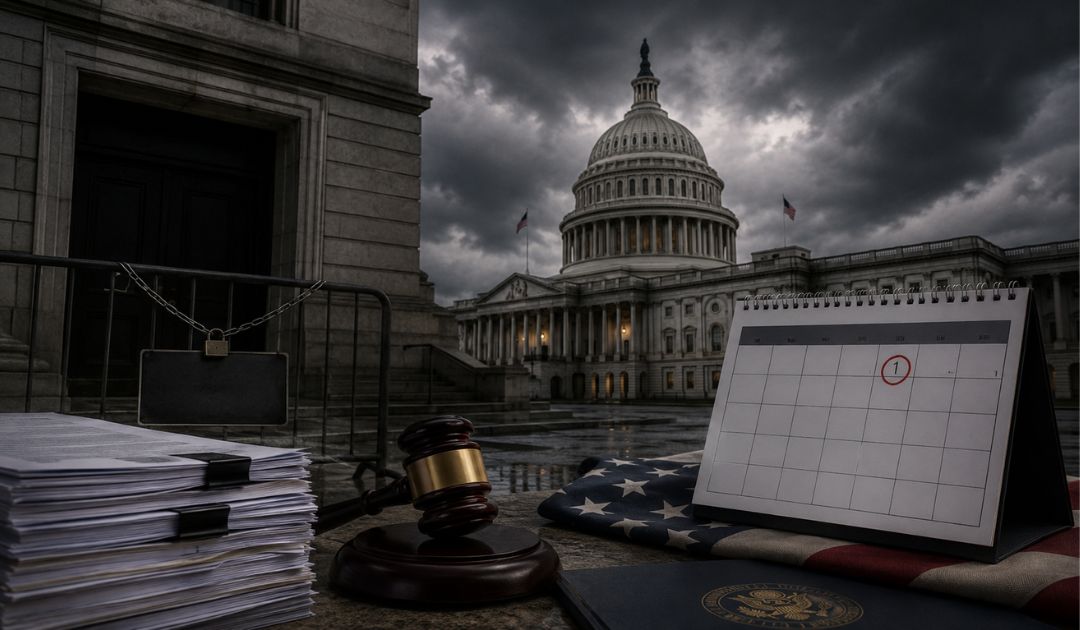
The House has already passed temporary funding through December 4th, but the Senate is preparing a separate bipartisan bill. Prediction markets disagree sharply about whether Washington will avoid another shutdown.
The United States government will shut down on October 1st, 2026 if Congress and the president fail to enact funding before the new fiscal year begins. The House has passed a continuing resolution that would keep agencies funded through December 4th, but that bill has not become law.
The Senate is pursuing a different route. Senate Majority Leader John Thune has asked Appropriations Chair Susan Collins to assemble a clean, bipartisan continuing resolution that can attract the 60 votes normally needed to advance funding legislation. Republicans control the chamber, but they cannot reach that threshold without Democratic support.
Current facts favor a temporary agreement, but recent history makes confidence difficult. Washington experienced a 43-day shutdown beginning on October 1st, 2025, followed by another record partial shutdown in early 2026. Congress knows the damage, yet the same political divisions remain.
Government Shutdown Snapshot
Prediction-market prices, contract probabilities, available liquidity, and payouts can change at any time. The market figures in this article reflect the screenshots captured on July 31, 2026.
Where the Funding Fight Stands Now
The House passed H.R. 9770 by a 220–205 vote. The measure generally continues current funding through December 4th and temporarily extends several programs and authorities that would otherwise expire.
House Democrats overwhelmingly opposed the measure, arguing that it was developed without meaningful bipartisan negotiations. Senate leaders are now working on a separate clean continuing resolution with technical funding adjustments requested by the Office of Management and Budget.
Both chambers must pass identical legislation, and the president must sign it. A House vote alone cannot prevent the shutdown.
What Could Cause the Government to Shut Down?
A shutdown begins when annual appropriations expire and no replacement funding is enacted. Congress can miss the deadline even when a majority of lawmakers says it wants to avoid a shutdown.
The Senate Cannot Reach 60 Votes
Republicans need Democratic support to advance most funding bills. A bill that is too partisan, includes disputed policy demands, or omits Democratic priorities can fail before a final vote.
The Chambers Pass Different Bills
The House and Senate can each approve temporary funding and still produce a shutdown if they refuse to accept the other chamber’s changes before the deadline.
Policy Riders Replace a Clean Funding Deal
Immigration, election rules, healthcare, federal grants, defense spending, agency restrictions, or other disputes can become attached to the bill and destroy the coalition needed for passage.
Internal Party Revolts Block a Compromise
Conservative Republicans can oppose temporary spending, while progressive Democrats can reject a bill that does not restrain the administration or protect their policy priorities.
The House Is Not Available to Act
The House has limited scheduled days in Washington before the deadline. A late Senate agreement could require members to return quickly for another vote.
The President Rejects the Final Agreement
Even an identical House and Senate bill does not become law until the president signs it or Congress overrides a veto.
What Could Keep the Government Open?
Congress has three ways to avoid a shutdown. Passing all twelve annual appropriations bills would be the normal solution, but lawmakers are unlikely to complete that process before September 30th.
- Pass a clean continuing resolution that temporarily maintains funding near current levels.
- Pass several full-year appropriations bills and use temporary funding for the remaining departments.
- Pass a broader full-year spending package before the deadline.
The continuing resolution is the most realistic path. It gives Congress more time to negotiate detailed fiscal-year 2027 spending bills and moves the next deadline beyond the November midterm elections.
What Agreement Needs to Happen?
A successful agreement must receive enough support in the Senate, survive the House, and earn the president’s signature. The easiest version would continue most funding at current levels through early December and avoid major unrelated policy demands.
A Mutually Accepted End Date
Lawmakers must agree on how long the temporary funding lasts. The House selected December 4th, while the Senate is working toward a date after the midterm elections.
Necessary Funding Adjustments
Some programs cannot operate normally under a simple extension. Limited technical changes, often called anomalies, must be negotiated without turning the bill into a broad policy package.
No Poison Pills
Provisions designed to force concessions on immigration, elections, healthcare, grants, or agency powers can cost the bill the bipartisan votes it needs.
Identical House and Senate Text
The chambers cannot send separate versions to the White House. One chamber must accept the other’s bill, or both must approve a final compromise.
The House Vote Does Not Remove the Shutdown Risk
The early House action is important, but it does not settle the funding fight. Senate Democrats are needed for a 60-vote coalition, and the Senate is preparing its own bill. A disagreement between the chambers can still consume the remaining time.
What Happens if the Government Shuts Down?
A shutdown does not close every federal function. Agencies must stop work funded by expired annual appropriations unless an activity is legally excepted, funded through another source, or necessary to protect life and property.
- Many federal employees are furloughed.
- Excepted employees may continue working without receiving immediate pay.
- Federal customer service, permits, grants, and inspections can slow.
- Economic reports can be delayed.
- Air travel can face staffing pressure and longer disruptions.
- Food assistance, farm programs, veterans’ services, and other programs can face administrative problems even when benefits continue.
- National parks and federal facilities can reduce services or close.
Shutdown effects grow with time. A short lapse can cause limited disruption, while a multiweek shutdown creates missed paychecks, backlogs, contractor losses, travel problems, and broader economic costs.
How Does the Government Reopen?
Congress must pass funding, and the president must sign it. Political statements, negotiations, and executive instructions cannot legally replace appropriations.
A reopening bill can be a short continuing resolution, a longer temporary bill, a full-year spending package, or a combination of temporary funding and completed appropriations bills. Once enacted, agencies receive reopening instructions, employees return, and delayed work begins moving again.
Federal employees are entitled to retroactive pay after a shutdown ends. Contractors and businesses affected by lost work do not receive the same automatic protection.
What Happened During the 2025 Shutdown?
The last full shutdown began on October 1st, 2025 and lasted 43 days, making it the longest in U.S. history. Democrats withheld the votes needed for temporary funding while pushing to address expiring healthcare tax credits. Republicans insisted that the government reopen before separate healthcare negotiations.
The shutdown left federal workers unpaid, disrupted food assistance, delayed economic data, and contributed to air-travel problems. The political dispute remained unresolved for weeks because neither side believed it had enough reason to concede.
Annual Funding Expires
The Senate fails to advance competing funding plans, and a full government shutdown begins.
Repeated Votes Fail
Republicans and Democrats continue blaming each other while federal employees miss pay, services deteriorate, and pressure builds.
The Senate Approves a Bipartisan Compromise
The Senate votes 60–40 for temporary funding through January 30th, three completed full-year appropriations bills, and back pay for federal workers.
The House Passes the Agreement
The House approves the funding package, the president signs it, and agencies prepare to reopen after 43 days.
Could the 2025 Reopening Deal Be Used Again?
Yes. The current Senate strategy resembles the deal that ended the 2025 shutdown: a clean short-term continuing resolution, limited technical changes, and continued work on selected full-year appropriations bills.
Susan Collins led the Senate negotiations that produced the 60-vote agreement in 2025, and she is again working with members of both parties. That experience makes an early compromise more plausible.
The political lesson cuts both ways. Lawmakers know how damaging another closure could be, but they also learned that a shutdown can last for weeks when both parties believe the other side will eventually surrender.
What Prediction Markets Think
Kalshi
A $100 Yes order in the captured example displayed a maximum payout of $265.86. A $100 No order displayed a maximum payout of $148.88. Kalshi’s contract resolves Yes if the federal government is at least partially shut down because of a lapse in appropriations at 10:00 a.m. ET on October 1st.
Polymarket
Polymarket’s captured market was evenly divided. Its wording, closing time, resolution date, and trading mechanics differ from Kalshi’s, so the two percentages should not be treated as identical measurements.
Together, the markets show uncertainty rather than consensus. Kalshi traders favor the government remaining open, while Polymarket traders price the outcome close to a coin flip.
Our Opinion: Will the Government Shut Down?
Our Editorial Lean Is Yes, but Only Slightly
Based on the current political environment, we do not trust Democrats and Republicans to reach an agreement simply because avoiding a shutdown would be better for the country. The parties have little middle ground, and recent funding disputes have shown how quickly negotiations can collapse.
A growing group of centrist Democrats has publicly pushed back against the party’s movement to the left. That internal disagreement could help create votes for a clean continuing resolution, but it can also make Democratic leadership less willing to accept a Republican-written bill without concessions.
Honestly, this could go either way. The House has acted early, Senate leaders are discussing a bipartisan product, and nobody should want a third shutdown. Those are meaningful reasons to predict No.
Nonetheless, we have been here before. Congress knew the consequences in 2025 and still allowed a 43-day shutdown. Our contrarian lean is that another shutdown begins on October 1st, although we view it as a close call rather than a near certainty.
The evidence-based outcome currently favored by Kalshi is that Congress passes temporary funding. Our editorial opinion is more skeptical because the House and Senate have not agreed on the same bill, Democratic votes remain necessary, and both parties can still use the deadline for leverage.
Trade the Shutdown Market on Kalshi
Eligible new users can receive $10 in trading cash and unlock up to $500 in additional rewards after trading at least $25 under the current offer.
Get $10 and Unlock Up to $500 Eligibility, qualifying trades, offer limits, expiration dates, and location restrictions apply. Prediction-market trading involves risk.
Get a Polymarket Trading Bonus
Eligible new Polymarket US users can deposit at least $10 and receive a $20 trading bonus through the campaign linked below.
Deposit $10 and Get a $20 Trading Bonus Bonus eligibility, campaign limits, timing, location requirements, and trading conditions apply.What Will Most Likely Happen?
The most conventional outcome is a temporary continuing resolution that keeps the government open through early December. The House has already approved one version, and Senate leaders say they are preparing a bipartisan alternative before the August recess.
The shutdown risk remains real because the chambers are not working from identical text, the Senate needs Democratic votes, and the final agreement can still become entangled with larger policy fights.
Prediction markets currently range from roughly a 36% shutdown chance on Kalshi to 50% on Polymarket. We consider the race closer than Kalshi does and narrowly lean toward another shutdown, but a clean bipartisan Senate bill would quickly move the evidence toward the government remaining open.
Sources

Bonus Predictions may receive compensation when readers create an account through an affiliate or referral link. Compensation does not change our editorial analysis or the market data presented. This article provides general information and is not financial advice.
Join the Discussion
Leave a Comment on This Story